


- Taliban give TTP $43,000 monthly, aiding terror attacks in Pakistan.
- Daesh-K’s attempt to infiltrate Pakistan thwarted by security forces.
- Outfit shifts to traditional courier networks to evade detection.
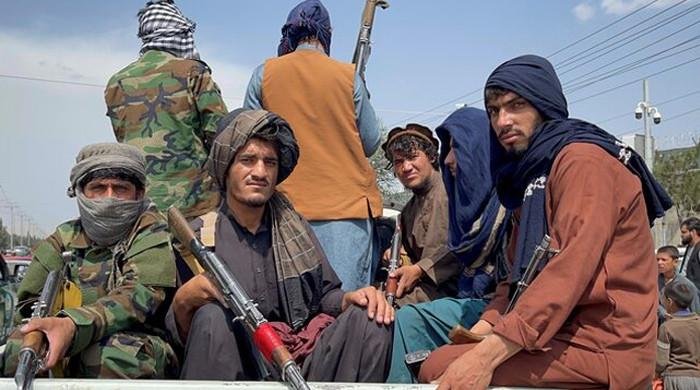
The Afghan Taliban continue to provide Tehreek-e-Taliban Pakistan (TTP) with logistical and operational space and financial support, leading to a rise in terrorist attacks in Pakistan, according to a report submitted to the UN Security Council by the Analytical Support and Sanctions Monitoring Team.
The 35th report by the team states that the status and strength of TTP in Afghanistan remain unchanged, while its attacks on Pakistan have increased significantly, with over 600 attacks recorded during 2024, including cross-border assaults from Afghan territory. The Taliban’s support to the banned outfit includes a monthly payment of 3 million Afghanis (approximately $43,000).
TTP has expanded its training infrastructure, establishing new centres in Kunar, Nangarhar, Khost, and Paktika (Barmal) provinces. The group has also increased recruitment efforts, including drawing fighters from the Afghan Taliban.
Furthermore, TTP has strengthened its ties with the Afghan Taliban and Al-Qaida in the Indian Subcontinent (AQIS), conducting joint attacks under the banner of Tehreek-e Jihad Pakistan (TJP). The report warns that this collaboration, along with TTP’s role in providing suicide bombers and fighters, could transform the group into a broader regional threat and an umbrella organisation for other militant groups in the area.
The report also highlights a significant setback suffered by Daesh-Khurasan in the summer when Pakistani security forces successfully intercepted its external operations branch’s attempt to establish itself inside Pakistan. This operation led to the arrests of key figures, including Adil Panjsheri (Afghan), Abu Munzir (Tajik), and Kaka Younis (Uzbek), who were involved in the recruitment, travel, and funding of fighters and suicide bombers. These individuals were linked to attacks in Kerman, Iran, and Moscow.
However, another senior Daesh-K member, Tariq Tajiki, suspected to be the mastermind behind the Kerman attack, remains in Afghanistan, according to one Member State.
To evade detection and reduce the risk of arrests, Daesh-K’s leadership has reportedly shifted from electronic and internet-based communications to traditional courier networks for delivering instructions and conducting in-person meetings.
The Balochistan Liberation Army (BLA) claimed responsibility for multiple high-casualty attacks during the reporting period, carried out by its Majeed Brigade (MB), which includes female members. The MB operates across the southern region of Pakistan, including in Awaran, Panjgur, and Dalbandin. Two Member States reported that MB has links with TTP, Daesh-K, and the ETIM/TIP, collaborating with the latter at operational bases in Afghanistan.
Jamaat Ansarullah has also been active, maintaining training camps in Khost province with Al-Qaida engineers and weapons instructors. The group operates a special military centre in the Kalafgan district of Takhar province to train Central Asian and Arab fighters. Additionally, it has formed the “Ansar” unit in the Imam Sahib district of Kunduz province to infiltrate border areas.
The Taliban have deployed a suicide bomber unit from the Lashkar-e Mansouri Martyrdom Battalion in Fayz Abad, Badakhshan province, in coordination with Jamaat Ansarullah and Al-Qaida fighters, using them in operations against anti-Taliban resistance groups.
The report highlights the continued collaboration between multiple militant groups in the region and the growing threat posed by their coordinated activities. The findings underscore the complex and evolving security landscape in South Asia, with far-reaching implications for regional stability.
Terrorist attacks have been rampant in Pakistan’s provinces of Khyber Pakhtunkhwa and Balochistan — which abut Afghanistan — targeting especially the law enforcers and security forces.
Islamabad has time again urged Kabul to not allow its territory to be used by terrorist groups to carry out attacks against Pakistan.
The diplomatic effort is coupled with ongoing kinetic action against terrorists by security forces who eliminated at least 15 militants, including Afghan Taliban members in a swift and effective response to the infiltration attempt last week.
Pakistan witnessed a sharp increase in terror attacks in January 2025, surging by 42% compared to the previous month, according to data released by the Pakistan Institute for Conflict and Security Studies (PICSS), a think tank.
January say two suicide bombings, both in Balochistan, which is the most affected regions along with Khyber Pakhtunkhwa. The banned TTP claimed responsibility for one, while the proscribed BLA took credit for the other.
