


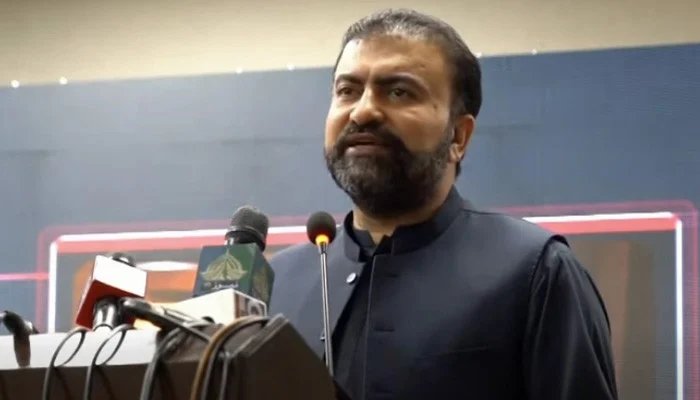
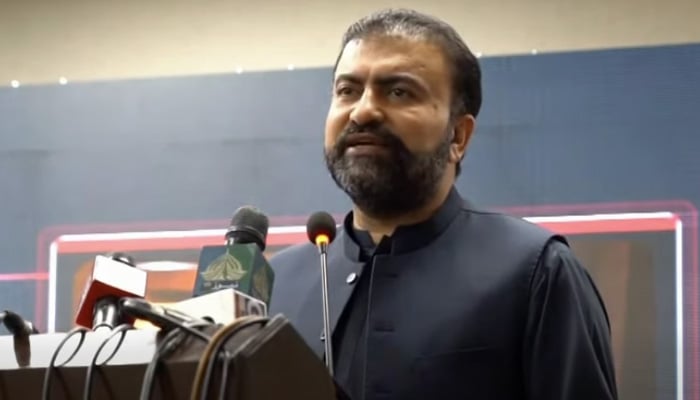
- CM Bugti warns action against properties used for terrorism.
- Govt considers relocation of residents from affected areas.
- Balochistan police launch 16 digital applications for citizens.
QUETTA: Balochistan Chief Minister Sarfraz Bugti has warned owners of vineyards and other private properties in Mastung that they could be treated as facilitators if militants use their land for attacks on security forces and government officials.
Responding to questions after the inauguration of Balochistan police’s digital initiatives at the Central Police Office on Friday, Bugti said the government did not want to take action that could harm ordinary citizens, as terrorists often use civilians as human shields, according to The News.
However, he said property owners could not claim ignorance if attacks were launched from their land.
“If a security forces’ convoy or the home minister is attacked from a vineyard, the owners cannot say they did not know terrorists were present on their land,” he said, adding that anyone whose private property was used for terrorism would be considered a facilitator.
He said vineyard owners were being repeatedly warned and, if private properties continued to be used for terrorism, the government would have two options: relocating people on a large scale and resettling them elsewhere, or eliminating the vineyards being used for terrorism.
Bugti said the blood of Pakistan Army, Frontier Corps and police personnel was “extremely sacred” and it was unacceptable for a security official to be martyred while private property continued to be used for terrorist activities. “The government will not tolerate this situation under any circumstances,” he said.
The chief minister also said Balochistan was moving towards maximum digitalisation of governance to improve public service, transparency and service delivery.
He said that eight existing Balochistan police applications had been upgraded and eight new ones introduced to help citizens access the criminal justice system and resolve day-to-day complaints.
Earlier, Balochistan IG Muhammad Tahir Khan briefed the chief minister on the 16 applications being launched.
Bugti congratulated IG Khan, police IT team and other officers involved in the project, and praised DIG Headquarters Ahsan Asad Alvi for his services to Balochistan.
He said digital facilities for families of police martyrs would enable direct contact with them, help identify their needs and improve their welfare. Facilities relating to Khidmat Markaz, hotels, travelling and the IGP Police Complaint Cell would also make police services more accessible to citizens.
Bugti said a women’s safety application had been introduced to address harassment at workplaces, on roads and during travel.
The application allows women to declare an emergency with a single click and immediately alert their parents and police. He announced a public awareness campaign, particularly for female students, working women and travellers.
Rs50m announced for police digitalisation
The chief minister announced Rs5 million as a cash reward for officers and personnel who worked on the digital initiatives and Rs50 million this year for further digitalisation of Balochistan police.
He thanked the Punjab government and Punjab police for supporting digitalisation in Balochistan and said the province had no hesitation in benefiting from successful initiatives in other provinces.
He added that the Sindh and Gilgit-Baltistan governments, on the direction of PPP Chairman Bilawal Bhutto-Zardari, had sought assistance in implementing Balochistan’s merit-based Artificial Intelligence Testing System.
On police welfare, Bugti said steps were being taken to improve salaries in line with inflation. Salaries of the Fighting Force, ATF, CTD and SOW had already been increased.
He said adapting the policing system to new requirements following Balochistan’s declaration as an A Area would take time, but the government was focused on empowering police to effectively combat terrorism and crime.
He said the government wanted Balochistan police to emerge as a strong and empowered police service within the next three to four years and expressed confidence that it would become one of Pakistan’s best police services.
Regarding the IGP Police Complaint Portal, Bugti said complaints lodged by citizens immediately appeared on the IGP Control Centre’s screen. Relevant officers were directed to act, deadlines were fixed and progress was monitored digitally.
He said CCTV and Safe City cameras had helped trace suspects in cases involving murdered traders in Quetta and Dr Mahnoor, while the Safe City system had also contributed to arrests following major terrorist attacks. The government, he said, had established a Safe City Authority and completed the relevant legislation.
Bugti praised the IT Secretary for developing the system from scratch, noting that his three-year tenure would be completed in October.
He said the Safe City Authority had been established under the Safe City Act and integrated with law-enforcement agencies, adding that the systems would continue to be improved.
On recruitment, Bugti said an internal error had been identified in the tehsildar recruitment process. A committee had been formed in coordination with the Public Service Commission to address the issue and would submit its report within seven to 10 days. The findings would subsequently be shared with the media and public.
He reiterated that the Balochistan government’s policy was based solely on merit and would not compromise on it, even at the cost of political losses. He said merit was essential to reconnecting the younger generation with the state after attempts to distance them from Pakistan and the state through propaganda.
Referring to recent Balochistan Revenue Authority recruitment, Bugti said around 20 to 25 people from his constituency had applied. As a politician and elected representative, he could have helped them secure jobs if he had wanted, but not a single candidate from Dera Bugti was selected.
He said this demonstrated that the recruitment had been conducted purely on merit, adding that the field was open for any young person from Dera Bugti who wanted to progress on merit, but he would not violate merit to appoint anyone to a position.
