


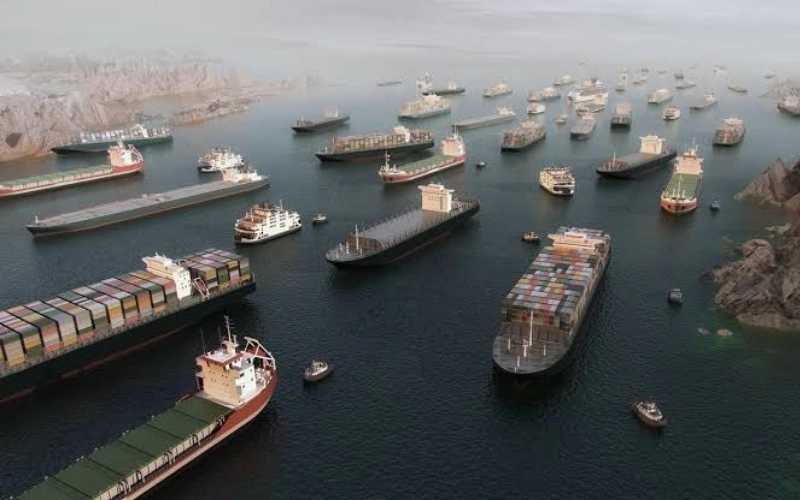
The world’s energy lifeline is barely moving. Six months into the war involving the United States, Israel and Iran, shipping through the Strait of Hormuz remains far below normal levels, disrupting vital trade and leaving thousands of seafarers stranded across the Persian Gulf.
The strategic waterway handled about 20% of global petroleum and liquefied natural gas exports before the conflict, with roughly 95 commodity-carrier transits each day.
That traffic plunged to about 10 vessels a day in March after Iran imposed a physical blockade and declared a 1,400-square-kilometer mined “danger zone.”
Shipping activity briefly recovered to about 36 vessels a day in late June following a diplomatic truce under the Islamabad Memorandum. But after negotiations collapsed July 8, traffic fell again, averaging about 15 vessels a day.
Data from the United Kingdom Maritime Trade Operations, or UKMTO, shows AIS-detected crossings remain nearly 90% below prewar levels, underscoring the continuing disruption at one of the world’s most important maritime chokepoints.
Read More: Iran warns ships of fines, detention over Hormuz violations
The conflict has also transformed commercial shipping through the strait. Vessels are increasingly using two high-risk routes: a northern channel along Iran’s coastline and a southern passage near Oman.
Since fighting intensified in July, about two-thirds of vessel movements have been classified as “dark” or unverified, compared with less than 1% before the war. Captains have reportedly switched off Automatic Identification System transponders, while GPS interference and limited satellite tracking have made vessels more difficult to monitor.
The disruption has created supply-chain bottlenecks across the Persian Gulf and increased risks for ships carrying energy and other commodities.
About 6,000 seafarers and 500 commercial vessels are stranded at Persian Gulf ports and anchorages, according to figures cited by the International Maritime Organization.
An evacuation framework launched by international maritime authorities in June was suspended after missile and drone attacks on merchant ships.
At least 20 seafarers and port workers have been killed in hostile actions across the region during the six-month conflict, according to the cited figures.
The IMO has warned that safe evacuation corridors and a return to normal maritime navigation will depend on diplomatic de-escalation among Washington, Tel Aviv and Tehran.
For now, the continuing disruption in the Strait of Hormuz is keeping a crucial global trade route under severe pressure, with energy markets, shipping networks and thousands of maritime workers caught in the fallout.
