


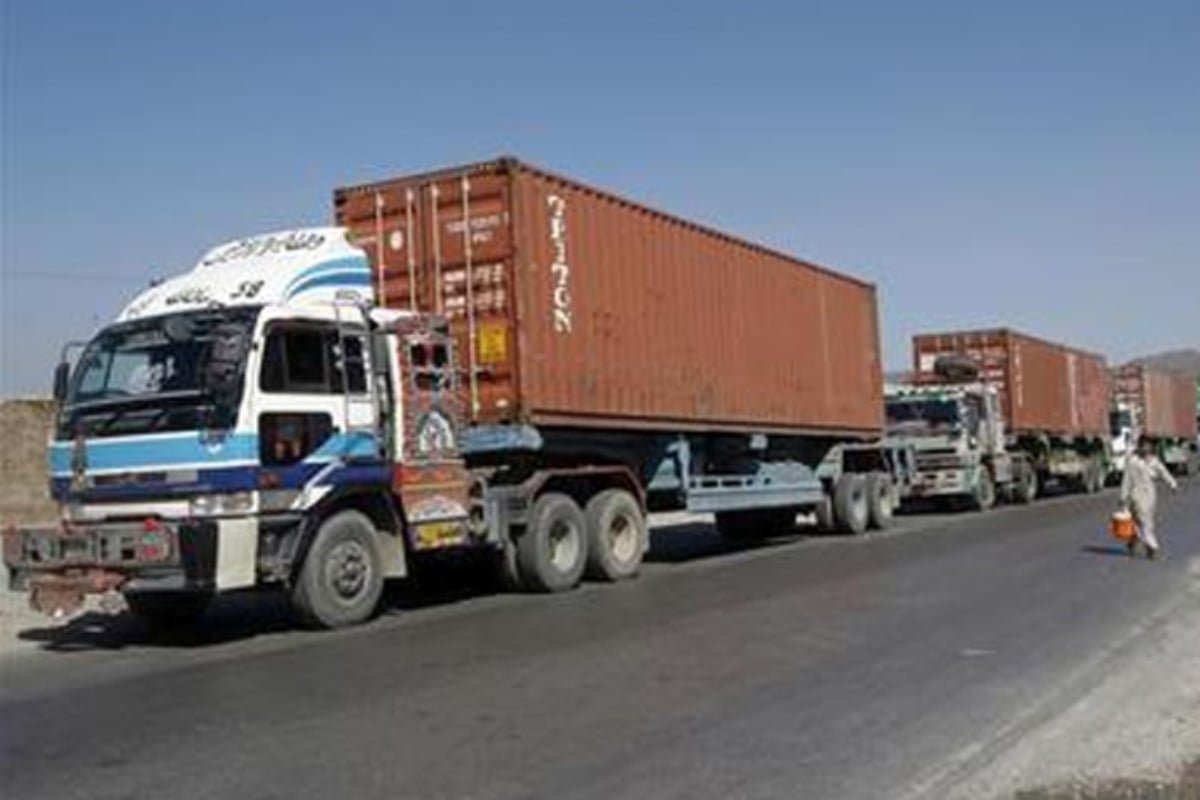
KARACHI: The All Pakistan Goods Transport Alliance announced Sunday it would suspend its nine-day nationwide strike for 40 days after the federal and Sindh governments pledged to address key demands, including petroleum pricing and toll tax reductions.
Alliance President Malik Shahzad Awan, speaking alongside Sindh Governor Nehal Hashmi, Karachi Mayor Murtaza Wahab and Federal Minister for Communications Abdul Aleem Khan, said the governments had assured progress on toll tax reductions, parking issues, petroleum pricing and axle load limits.
Several issues had already been resolved, Awan noted, while others would be taken up at the cabinet level. He said committee meetings would continue and expressed hope that commitments would be honored.
“We are not ending the strike, we are postponing it,” Awan said, adding that the alliance could resume protests if assurances were not implemented.
Key Concessions Secured
Awan said Aleem Khan gave assurances that a committee would be formed to review and reduce toll taxes, that petroleum prices would be revised every 15 days or monthly rather than daily, and that 10-wheeler trucks would be allowed to carry appropriate weight limits.
The Sindh government also promised to resolve parking issues, Awan added.
Hashmi described the regional situation as extraordinary, noting that economic impacts of ongoing conflict were being felt globally. He said Prime Minister Shehbaz Sharif and military leadership were working to ensure positive effects reached the public.
“Both sides agreed that they are ready to make every sacrifice for the country,” Hashmi said.
Textile Sector Warns of Supply Chain Disruption
Pakistan’s textile industry had warned that the strike could disrupt production and export shipments, urging Sharif to broker an urgent resolution.
In separate letters to the prime minister, the All Pakistan Textile Mills Association and the Pakistan Textile Council warned that continued disruption could affect textile and apparel supply chains.
Last week, goods transporters and oil tanker operators suspended services after negotiations with the government failed. They demanded the daily diesel pricing decision be withdrawn, recent toll tax increases reversed to June 30, 2024, levels, and withholding tax reduced from 7% to 2%.
“The textile industry is already under serious pressure,” the APTMA said. “Due to the strike, export containers, imported cotton containers, and local cotton transport trucks are not available. This is directly affecting export shipments, movement of imported cotton from ports, and lifting of local cotton from markets to mills.”
The transport sector has strong backward and forward linkages across the economy, and disruptions can ripple through interdependent industries. Transportation contributes significantly to Pakistan’s gross domestic product through employment and the movement of goods and people.
With rising global population, e-commerce and time-bound logistics, supply chain efficiency has become vital to business and customer satisfaction, experts note. A profitable supply chain cannot be ensured without efficient logistics, according to industry research.
