


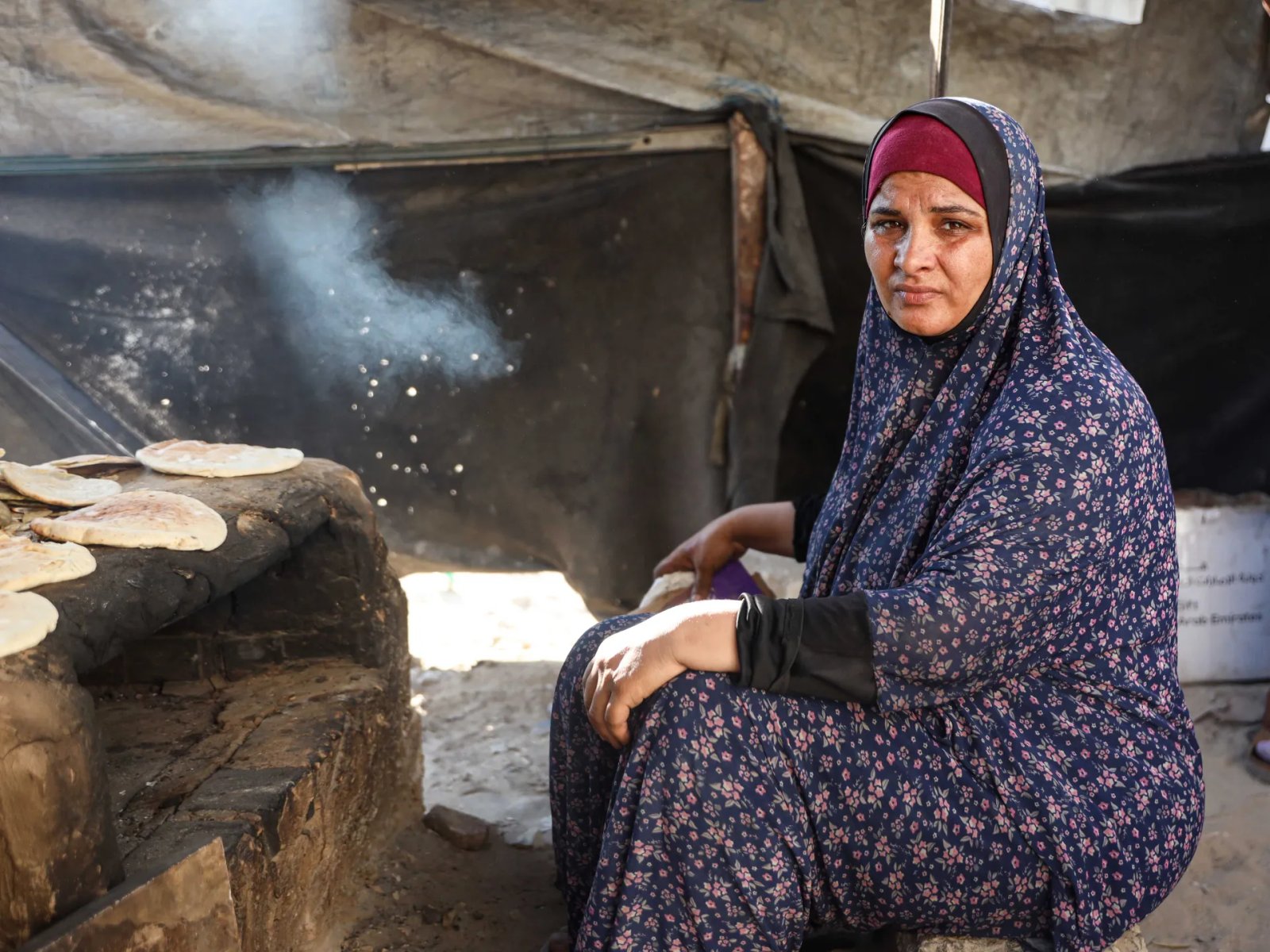
Gaza City — Rabab Deifallah sits inside her tent, clutching a small, battered lighter. She presses it once, then again, trying to produce a spark strong enough to ignite a pile of wood inside a stove.
The mother of five has carefully looked after the lighter. Her son has repaired it several times since it became difficult to buy a new one after Israel’s genocidal war on Gaza began in October 2023.
Recommended Stories
list of 4 itemsend of list
Firewood has become essential for 46-year-old Rabab. She uses it to bake bread, heat water for her children, prepare food and make tea amid shortages of cooking gas and soaring fuel prices.
“Our whole daily life depends on fire,” Rabab told Al Jazeera. “But getting a fire started begins with a lighter and this small object has become one of the hardest things to find in Gaza.”
Before the war, lighters were so cheap and readily available that she remembers buying three for one shekel ($0.33). Today, a new lighter can cost between $27-33 and Rabab last spent $12 to repair her old lighter.
“Should I spend that amount on a lighter, or should I buy a bag of flour?” she asked.
![Rabab Deifallah holds the lighter she relies on to cook, bake bread and heat water for her five children [Abdelhakim Abu Riash/ Al Jazeera]](https://www.aljazeera.com/wp-content/uploads/2026/08/873A9226-copy-1786802933.jpeg?w=770&resize=770%2C513&quality=80)
Palestinians in Gaza would rather spend their limited money on food, so a single lighter is often passed around families in several tents.
Some days, Rabab cannot find a lighter at all, so her family has been forced to spend days eating cold food or waiting until a neighbour has a fire burning to borrow a spark.
She often sends a piece of cardboard to a neighbour to get a light off their fire and bring it home. Other times, if a neighbour is baking bread, she may ask to use their oven to prepare food for her family.
The lighter is now something she guards carefully, as it is, for her, the starting point for fire, food, bread and hot water.
A second struggle
Nearby, Hasnaa Mansour, 43, faces the same problem but from a different angle.
Displaced from Jabalia refugee camp, Hasnaa sits beside a clay oven she had treasured since her family’s financial situation deteriorated during the war.
Her husband previously worked as a tailor and the family lived relatively comfortably, but due to a lack of business, Hasnaa now bakes and sells food to help support their six children.
Hasnaa has repeatedly repaired her lighter because buying a new one is beyond her means.
But a shortage of cooking gas has made the problem even worse.
“With gas, all you need is a small spark to light it. But with the oven, I need a real fire,” she said.
“I’ve been sitting here since the morning and by 10 o’clock I still couldn’t light the oven. I sent my young daughter with a piece of cardboard to look for someone who had a fire burning, but she couldn’t find anyone.”
![Hasnaa Mansour, 43, sits beside the clay oven she uses to bake food for sale, but struggles to light it because of the shortage of lighters [Abdelhakim Abu Riash/ Al Jazeera]](https://www.aljazeera.com/wp-content/uploads/2026/08/873A9351-copy-1786802983.jpeg?w=770&resize=770%2C513&quality=80)
Restrictions and shortages
The lighter shortage comes amid Israel’s continued siege on Gaza.
The UN Office for the Coordination of Humanitarian Affairs (OCHA) says restrictions on the movement of goods and closures of crossings have contributed to shortages and rising prices of essential supplies. OCHA also says items classified by Israeli authorities as “dual-use” face additional difficulties in obtaining approval to enter Gaza.
The Gaza Chamber of Commerce and Industry said in June that restrictions on crossings and the mechanisms for bringing commercial shipments into Gaza continued to limit the flow of goods.
It said that more than 30,000 trucks entered Gaza during the first five months of 2026, an average of no more than 191 trucks a day – still far below the territory’s daily pre-war needs.
In an earlier publication, the chamber of commerce documented the emergence of lighter-repair work during the war, saying lighters were among items prevented from entering Gaza.
That is why lighters are now so valuable and families spend relatively large amounts to fix them rather than buy a new one.
Sharing a single lighter
For Shadi Abu Shamlah, a displaced father living with his family at Al-Karmel School west of Gaza City, the shortage means sharing a lighter among tents.
“The whole school here… you wouldn’t find more than four lighters,” he said.
The few available lighters move from one tent to another as families try to cook, heat water or prepare hot drinks.
“The lighter today is the backbone of life. If you have a lighter in your tent, you’re okay. If you don’t have one, you’re stuck,” he said.
“The simplest things need fire. You want a cup of tea, you want to cook, you want to make milk for a child… you need fire.”
Abu Shamlah says his family sometimes goes to bed without dinner because they cannot light a fire.
Repairing lighters has also become difficult. He says a lighter flint can cost 25 to 30 shekels ($8–$10), while people have resorted to using gas from larger cylinders to refill lighters, sometimes causing burns.
![Tamer Al-Shawish, 24, repairs lighters at a small stall in a trade that emerged during the war [Abdelhakim Abu Riash/ Al Jazeera]](https://www.aljazeera.com/wp-content/uploads/2026/08/873A9415-copy-1786802988.jpeg?w=770&resize=770%2C513&quality=80)
Tamer Al-Shawish, who worked as a driver before the war, turned to fixing lighters to help provide for his family.
On a small stall near Al Karmel school camp, the 24-year-old father of two says his new profession was previously unheard of.
“The war has forced us into jobs and work we never knew before. I started repairing lighters so I could provide for my family’s needs,” he told Al Jazeera.
A new profession
“Before the war, no one needed to repair a lighter. They were cheap and available. When the gas ran out, we would throw it away and buy another one.”
“People come to repair the lighter because it is cheaper than buying a new one, especially with the high prices and shortages of basic goods,” Tamer said.
He salvages parts from damaged lighters to repair others.
“Even an old lighter has value now. We take parts from damaged lighters and use them to repair other lighters, so they last longer.”
